
INFORMATION ABOUT THE MEANING OF THE TRACK
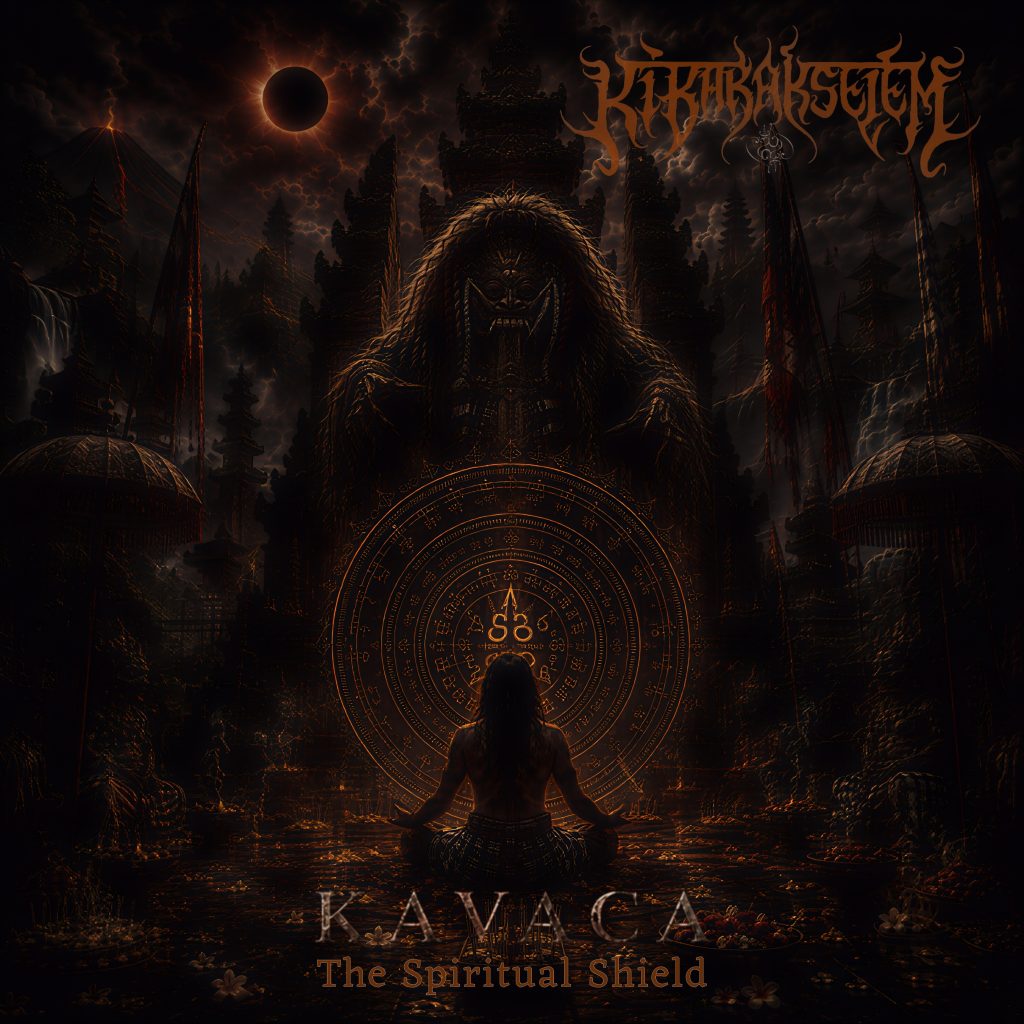
“KAVACA: The Spiritual Shield” explores one of the most controversial and misunderstood spiritual traditions of Bali.
Inspired by the esoteric teachings of Bhairawa, the song draws from a path long associated with Bali’s Pengiwa (Left-Hand Path). Even today, many Balinese—including followers of the Vedic tradition themselves—regard these teachings as taboo, often associating them with Pengeleakan, secrecy, and forbidden knowledge. Yet behind those perceptions lies an ancient spiritual discipline centered on confronting fear, dissolving the ego (ahamkara), and transcending duality.
The title KAVACA means “The Spiritual Shield.” It is not a physical armor, but a sacred protection forged through mantra, inner discipline, and direct spiritual realization. The mantras and Balinese kidung featured in this composition are authentic ritual elements preserved in traditional Balinese lontar manuscripts, forming the spiritual core of the song rather than serving as decorative folklore.
Although rooted in Balinese Bhairawa teachings, the song reflects the universal experience known as the Dark Night of the Soul—the painful dissolution of fear, identity, and ego before awakening to a deeper state of consciousness. The greatest battle is not against an external enemy, but against the darkness within oneself.
Musically, KI BARAK SELEM merges Melodic Black/Death Metal with the ritual atmosphere of traditional Balinese gamelan, translating one of Bali’s oldest esoteric spiritual traditions into the language of Extreme Metal.
This is not mythology.
This is not fantasy.
This is an ancient spiritual tradition… heard through Black Metal.
LYRIC EXPLANATION
Lyricwritten by Kadek D. Putra Pande
INTRO (Āvāhana – The Invocation)
Om Namo Bhairawayasya,
Ugra-rupa Mahatmanah.
Sarwa-wighna-winasanang,
Bhairawa Deva Namostute.
Om Hram Hrim Hrum Bhairawaya Namah.
Meaning:
The song begins with an ancient invocation (āvāhana), respectfully calling upon the presence of Bhairawa—not as an external deity to grant miracles, but as the awakened force of fearlessness and spiritual transformation within the practitioner.
The mantra praises Bhairawa as the fierce and compassionate destroyer of obstacles, ignorance, and inner darkness. The bija mantras (Hram, Hrim, Hrum) symbolize the awakening of divine consciousness before the spiritual journey begins.
Concept:
Before entering the path, the seeker asks permission and invokes the sacred presence that will guide the entire inner transformation.
KIDUNG
Nunas rauh Sang Bhairawa
Mrasidayang jroning manah
Mantra suci dados kavaca
Nuntun idep nuju Kasunyatan
Ahamkara sampun lebur
Bhaya lebur ring jnana siddhi
Raga sepi, citta prasida
Manunggal ring Sang Kasunyatan
Meaning:
The Balinese kidung expresses the practitioner’s heartfelt prayer for Bhairawa to dwell within the heart. Here, mantra is understood as a Kavaca—a spiritual shield that protects not by violence, but by awakening awareness.
As the prayer continues, ego (ahamkara) gradually dissolves. Fear disappears through wisdom (jnana siddhi), while body and mind enter profound stillness. Ultimately, the seeker becomes united with Sang Kasunyatan—the Absolute Reality beyond all duality.
Concept:
This section represents surrender. The practitioner no longer seeks external protection, but inner transformation.
VERSE I
No blood to offer. No flesh to burn.
Only the fear, I carried within.
The sacred fire consumes my name.
The silent witness remains awake.
Meaning:
The first verse rejects the idea that spiritual power requires physical sacrifice.
Instead of offering blood or flesh, the only true offering is one’s own fear.
The sacred fire burns away the false identity built by ego, while the “silent witness” symbolizes pure awareness that remains untouched by thoughts, emotions, and illusion.
Concept:
The real sacrifice is not the body—but the ego.
PRE-CHORUS I
Break the chain.
Silence the self.
Beyond all shadows,
I stand unveiled.
Meaning:
The chains represent attachment, illusion, and identification with the false self.
By silencing the egoic mind, the practitioner steps beyond the shadows of ignorance and stands completely unveiled before Truth.
Concept:
The journey toward liberation begins with the courage to let go of the self.
CHORUS I
The mantra becomes my living shield.
Bhairawa walks within my breath.
No god above. No fear below.
Only the Flame—awake… within.
Meaning:
The mantra has become a living shield—not an object carried by the practitioner, but a living spiritual presence.
“Bhairawa walks within my breath” symbolizes that divine consciousness is no longer perceived as something outside oneself.
The lines:
No god above. No fear below.
do not deny divinity.
Rather, they express the realization that true spiritual awakening transcends the dualistic relationship between worshipper and the worshipped. Fear disappears because separation disappears.
Only the inner Flame—the awakened consciousness—remains.
Concept:
The true Kavaca is awakened consciousness itself.
BRIDGE (Whisper)
Om Śri Bhairawa mahā-ugra, Ah-Kāra murti.
Hum-Kāra netra, Phat-Kāra bāhu.
Sarwa bhaya, sarwa raksasa, muksah dēna hum.
Om Nirbhaya-padam swāhā.
Om Sri Bhairawa Mahasakti,
Ah Rtek Mahasura Rupa,
Ah-Kara Ugra Murti,
Nirbhayang Kurume Swaha.
Meaning:
The bridge contains authentic Balinese Bhairawa mantras preserved within traditional lontar manuscripts.
The first mantra invokes Bhairawa through sacred bija syllables, asking for the destruction of fear and negative forces while guiding the practitioner toward Nirbhaya—the state of complete fearlessness.
The second mantra serves as a spiritual Kavaca, strengthening the inner being through Bhairawa’s sacred power while dissolving harmful energies surrounding the practitioner.
The whispered repetition symbolizes continuous internal recitation during deep meditation or ritual trance.
Concept:
This is no longer poetry.
This is the ritual itself.
VERSE II
No name remains. No fear survives.
The mantra breathes. The silence lives.
No walls endure. No self returns..
Within the Void… The Flame still burns.
Meaning:
After the ritual, transformation has already occurred.
The former identity has disappeared.
Fear no longer exists.
Even silence itself has become alive.
The walls separating self from reality collapse, and the ego never returns.
Within the Great Void (Śūnya), the eternal Flame of awareness continues to burn.
Concept:
The seeker has crossed the threshold of ego-death.
PRE-CHORUS II
Nothing to guard.
Nothing to fear.
The sacred fire
is always here.
Meaning:
Having realized the nature of reality, there is nothing left to defend.
Fear has vanished because the illusion of separation has disappeared.
The sacred fire is no longer something to be sought—it has always existed within.
Concept:
Protection is no longer necessary when fear itself has dissolved.
CHORUS II
The mantra becomes my living shield.
Bhairawa walks within my breath.
No god above. No fear below.
Only the Flame—awake… within.
Meaning:
The chorus now carries a deeper significance than before.
What began as an invocation has become direct realization.
The mantra is no longer recited.
It has become the practitioner’s very nature.
Concept:
The spiritual shield is no longer being sought.
It has become one with the seeker.
EPILOG
Tan hana bhaya
Tan hana pamrih
Kavaca linaksanayang
Rahayu… Rahayu…
Meaning:
The closing verses state:
Tan hana bhaya — There is no fear.
Tan hana pamrih — There is no selfish desire or expectation.
Kavaca linaksanayang — The spiritual shield has been fully realized and embodied.
The repeated blessing:
Rahayu… Rahayu…
is not merely a farewell.
It is a prayer for harmony, peace, and spiritual well-being after completing the inner journey.
Concept:
The ritual has ended.
The practitioner returns to the world—not as the same person,
but transformed.
Overall Interpretation
KAVACA: The Spiritual Shield is not a song about invoking supernatural power to defeat external enemies. It is a musical interpretation of an inner initiation inspired by the Balinese Bhairawa tradition. The entire composition portrays the universal journey of the Dark Night of the Soul: confronting fear, dissolving the ego (ahamkara), and awakening to a deeper reality through mantra, silence, and direct spiritual experience