
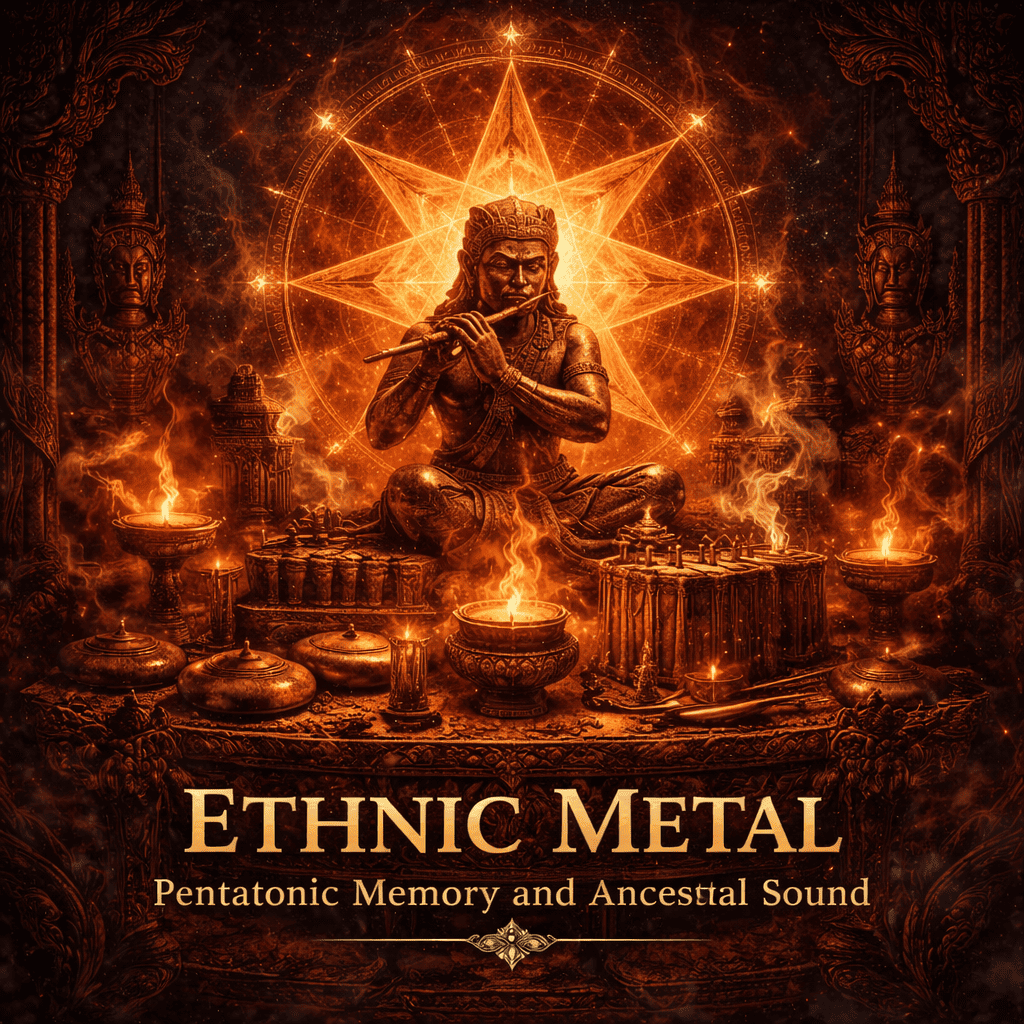
Pentatonic Memory and Ancestral Sound
Ethnic Metal is a branch of metal that integrates indigenous musical traditions into extreme or heavy frameworks. Unlike folk-influenced metal that often emphasizes melody or historical imagery, Ethnic Metal engages directly with ethnomusicological structures — scale systems, rhythmic philosophies, and ceremonial functions rooted in specific cultures.
At its core, Ethnic Metal is not defined by instrumentation alone, but by how sound is conceived and organized. Traditional tonal systems replace or reshape Western harmony, creating music that feels circular, trance-oriented, and deeply connected to ancestral memory.
Pentatonic Systems as Musical Identity
Many indigenous musical traditions across Asia, Africa, and the Pacific are built upon pentatonic scales. These scales do not follow the linear tension-resolution logic of Western music, but operate through repetition, oscillation, and subtle variation.
Within Ethnic Metal, pentatonic frameworks introduce:
- Melodic ambiguity that resists clear resolution
- Cyclical phrasing rather than progressive modulation
- Hypnotic tension grounded in ritual repetition
This approach produces a sonic atmosphere that feels ancient, instinctive, and spiritually charged — even when performed through distorted guitars and amplified percussion.
Beyond Cultural Ornamentation
Authentic Ethnic Metal moves beyond surface-level cultural symbols. It does not merely place traditional instruments over metal riffs, but allows indigenous musical logic to reshape composition itself.
Key characteristics often include:
- Non-Western scale systems guiding riff construction
- Rhythmic patterns derived from ritual or communal performance
- Minimal harmonic movement to sustain trance states
- Emphasis on texture, resonance, and repetition
Here, metal becomes a vessel rather than a dominating force.
Ethnic Metal and Ritual Consciousness
Ethnic Metal often intersects naturally with ritual and spiritual traditions. In many cultures, music functions as ceremony — a medium for invocation, storytelling, and transformation.
By reintroducing these principles into extreme metal, Ethnic Metal challenges the genre’s modern, linear mindset and reconnects it with sound’s original function: to alter consciousness.
Balinese Ethnic Metal Resonance
Within Balinese musical tradition, pentatonic systems and cyclical rhythms form the foundation of ceremonial sound. Gamelan music, temple chants, and ritual percussion operate within structures designed to sustain collective focus rather than individual expression.
When these principles intersect with extreme metal frameworks, Ethnic Metal gains a distinct Balinese character — one defined by hypnotic repetition, metallic resonance, and ceremonial intent.
Ethnic Metal and Ki Barak Selem
In the sound of KI BARAK SELEM, Ethnic Metal plays a central role by connecting the extreme energy of metal with the ancient sonic logic of Balinese musical tradition. Balinese gamelan and ritual music are rooted in pentatonic sonorities and cyclical rhythmic motion, and these principles inform the melodic and structural DNA of the compositions.
Rather than layering gamelan sounds superficially, KI BARAK SELEM allows the pentatonic basis and rhythmic cycles of Balinese ethnic music to permeate riff construction, song flow, and atmospheric development. The result is music that feels both ancestral and confrontational — where distorted guitars echo like ceremonial gong strikes and rhythmic repetition feels like ritual invocation.
Ethnic Metal within this context becomes more than a stylistic choice; it becomes a bridge between cultural memory and modern sonic intensity, anchoring Balinese Mysticism Ritual Metal in sound principles that belong to centuries of ceremonial practice. This, in turn, enhances the spiritual and ritual dimensions of the music, making KI BARAK SELEM’s approach both authentic and deeply rooted.