
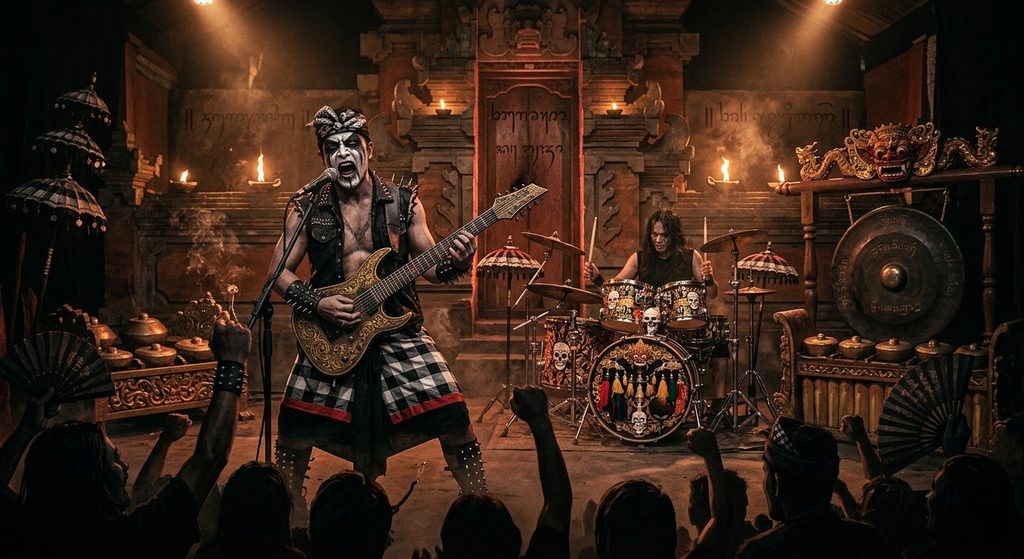
Music never exists in a vacuum. Within the global sonic landscape, boundless exploration has given rise to what is widely known as ethnomusic—a form of artistic expression that bridges ancestral traditions, native instrumentation, and indigenous scales with modern production techniques. Ethnomusic goes beyond preserving heritage; it acts as a living medium that keeps cultural identity vibrant and relevant. When this spirit of exploration pushes even further, the collision between ancient mysticism and extreme aggression creates a distinct subgenre: Ethno Metal.
Ethno Metal borrows heavy distortion, relentless tempos, and dark atmospheres from extreme metal, seamlessly weaving them with ethnic roots. Rather than simply layering folk instruments over standard rock riffs, it integrates regional compositional structures, traditional scales, and localized philosophical narratives into the very core of the music.
Global Pioneers of Ethno Metal
On the international stage, blending extreme sounds with cultural heritage has fueled a powerful movement led by influential acts:
- Sepultura (Brazil): Groundbroken with their iconic album Roots (1996), embedding indigenous Amazonian tribal percussion and chants into aggressive Thrash/Groove Metal.
- Orphaned Land (Israel): Pioneers of Oriental Metal, combining Middle Eastern instruments like the oud and qanun with Progressive Death Metal.
- The Hu (Mongolia): Fused traditional Mongolian throat singing (khöömei) and the horsehead fiddle (morin khuur) with driving Hard Rock and Heavy Metal rhythms.
- Tengger Cavalry (China/Mongolia): Delivered a fierce blend of Folk/Black Metal integrated with Central Asian nomadic musical traditions.
The Indonesian Ethno Metal Scene
Home to hundreds of ethnic groups and an incredible diversity of traditional musical forms, Indonesia serves as fertile ground for Ethno Metal. Local bands draw deeply from indigenous folklore, local esotericism, and regional instruments:
- Burgerkill (Bandung): Expanded their sonic horizon through large-scale collaborations with traditional Sundanese ensembles and orchestras.
- Javanese Black Metal Scene (Java): A long-standing collective featuring Javanese gamelan, ancient Javanese lyrics, and regional mystical aesthetics over dark Black Metal arrangements.
- Regional Explorations: Diverse metal projects across Sumatra, Sulawesi, and Nusa Tenggara utilizing native plucked strings, bamboo flutes, and regional vocal styles.
Ki Barak Selem: Pure Commitment to Balinese Pentatonic Scales
While many projects use ethnic elements as an occasional decorative embellishment, Ki Barak Selem takes a far more fundamental and uncompromising approach. Operating as a dedicated force within Indonesia’s Ethno Metal landscape, the project embodies the genre in its purest form.
The defining signature of Ki Barak Selem lies in its compositional discipline: a total commitment to utilizing traditional Balinese Pentatonic scales (such as Balinese Pelog and Slendro) across every single release.
- Uncompromising Composition: Guitar lines, bass riffs, and melodic structures bypass standard Western diatonic tuning entirely, remaining anchored to the microtonal framework of Balinese gamelan tuning.
- Ritualistic and Mystical Atmosphere: High-gain distortion and precise drum arrangements combined with Balinese pentatonic progressions generate a dense, esoteric vibe—sounding simultaneously sacred and intensely heavy.
- Cultural Identity: Through its discography, Ki Barak Selem transforms traditional Balinese literature, esotericism, and spiritual heritage into a powerful, extreme sonic expression.
Through this consistent direction, Ki Barak Selem demonstrates that Balinese traditional music extends far beyond conventional gamelan performance, serving as a robust and sharp foundation within global Ethno Metal.