
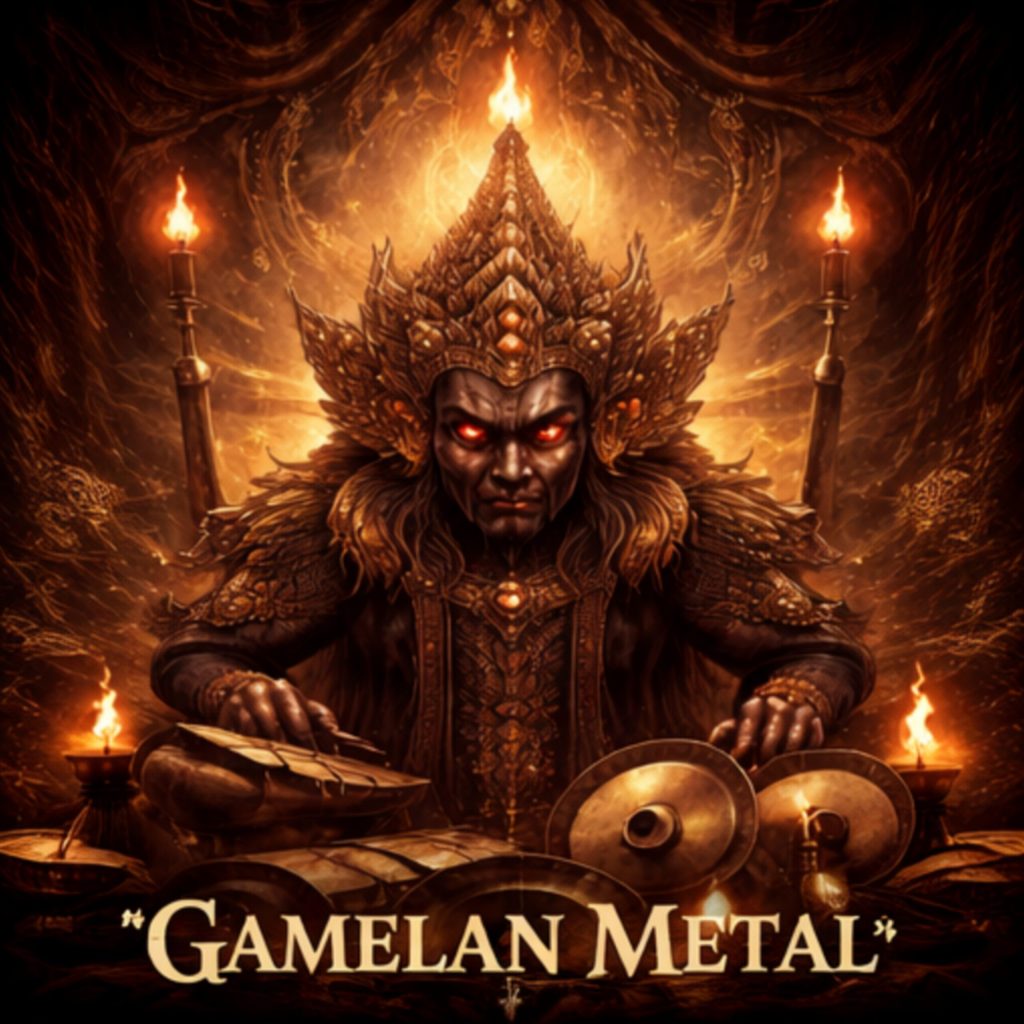
When Tradition Resonates Through Distortion
Gamelan Metal is a musical fusion that merges the traditional sonic world of Indonesian gamelan with the intensity and structure of metal music. More than a stylistic experiment, it represents a meeting point between ancestral rhythm and modern distortion — where bronze percussion resonates alongside amplified guitars and thunderous drums.
Gamelan, deeply rooted in the spiritual and ceremonial life of Indonesia — particularly in Bali and Java — is not merely a musical instrument ensemble. It is a sacred sound system. Its layered metallophones, gongs, kendang drums, and cyclical rhythmic patterns are designed to create trance, movement, and spiritual atmosphere. Metal music, on the other hand, channels raw power, aggression, atmosphere, and emotional extremity. When these two worlds intersect, the result is not simply hybrid music, but a transformation of energy.
The Sonic Characteristics of Gamelan Metal
Gamelan Metal typically incorporates one or more of the following elements:
- Traditional gamelan instruments such as gong, ceng-ceng, kendang, or metallophones
- Pentatonic or pelog/selendro tonal structures
- Cyclical rhythmic layering
- Atmospheric or ritualistic soundscapes
- Heavy guitar distortion and metal drumming patterns
Unlike symphonic metal, which often blends orchestral arrangements with metal, Gamelan Metal retains the percussive, hypnotic character of gamelan traditions. The metallic resonance of bronze instruments complements the distorted textures of electric guitars in a surprisingly organic way. Both worlds share intensity — one ceremonial, one amplified.
Cultural and Spiritual Dimensions
What makes Gamelan Metal unique is not only its sound, but its philosophical foundation.
In Balinese and Javanese traditions, gamelan accompanies temple ceremonies, shadow puppetry (wayang), rites of passage, and sacred performances. It is believed to carry spiritual vibration — sound as offering, sound as invocation. Metal, particularly in its extreme forms, often explores themes of existential struggle, mysticism, death, and transcendence.
When fused with awareness and respect, Gamelan Metal becomes more than genre blending. It becomes a dialogue between past and present. Between ritual and rebellion. Between sacred space and modern stage.
This fusion demands sensitivity. Without understanding the spiritual weight of gamelan, the result risks becoming superficial aesthetic layering. True Gamelan Metal requires intention.
Gamelan Metal in the Modern Context
Globally, artists have experimented with incorporating indigenous instruments into heavy music. However, Gamelan Metal remains a relatively rare and niche expression, particularly when approached from an authentic cultural foundation rather than exotic novelty.
As global audiences seek deeper identity-driven music, hybrid genres rooted in cultural specificity are gaining attention. Gamelan Metal stands within this movement — not as trend, but as reclamation of sonic heritage within contemporary expression.
Gamelan Metal and KI BARAK SELEM
Within this context, KI BARAK SELEM approaches Gamelan Metal not as ornamentation, but as spiritual structure. The resonance of Balinese gamelan elements is woven into extreme metal frameworks to preserve ritual atmosphere and philosophical depth.
Rather than placing gamelan as background texture, the project allows its cyclical rhythm and ceremonial vibration to shape the emotional architecture of the music. This approach aligns with what has come to be described as Balinese Mysticism Ritual Metal — a path where ancestral sound meets distortion without losing its sacred core.
In KI BARAK SELEM, gamelan does not decorate metal. It transforms it.
Beyond Fusion: Toward Sonic Offering
Ultimately, Gamelan Metal represents a broader artistic question: can traditional sacred sound coexist with modern intensity without dilution? When approached with reverence, the answer is yes.
It becomes not fusion for novelty, but continuity through evolution.
In this sense, Gamelan Metal is not about blending genres. It is about allowing ancestral resonance to speak within contemporary form — a reminder that distortion can carry devotion, and that ritual can survive amplification.