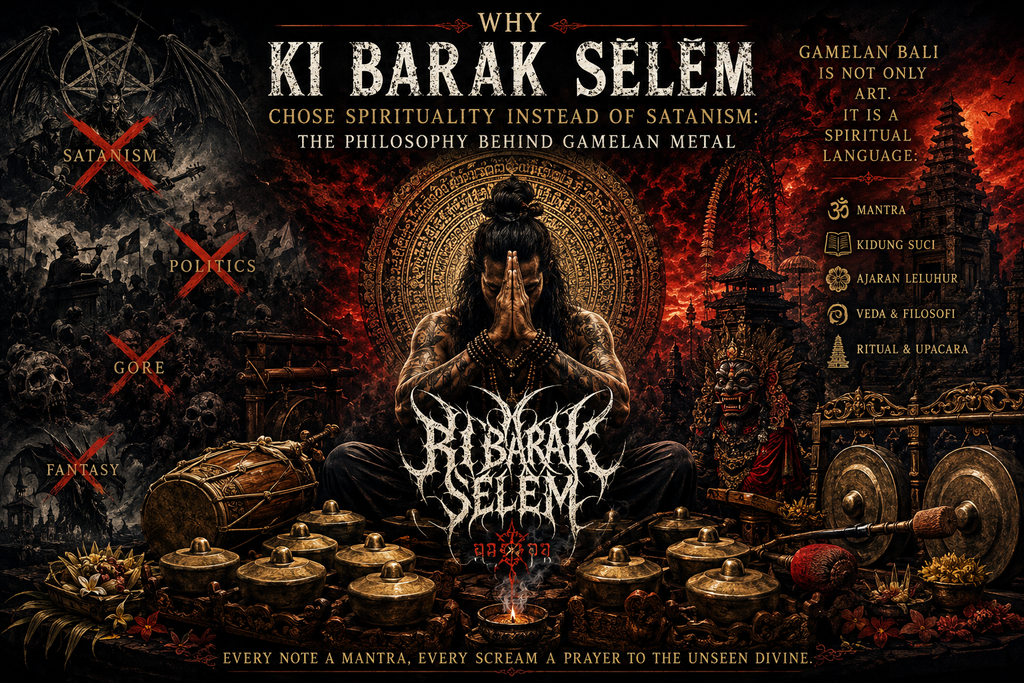
“Every Note a Mantra, Every Scream a Prayer to the Unseen Divine.”
KI BARAK SELEM rises from the sacred soil of Bali, Indonesia. An independent one-man Gamelan Metal project, originally founded in 1998, it merges Death Metal intensity with Ritual Metal and Spiritual Metal devotion also Ethnic Metal consciousness, transforming sound into offering.
Blending Extreme Metal with the haunting resonance of Balinese gamelan, this is ethnic metal expressed through ancestral vibration. Rooted in pentatonic memory and ceremonial rhythm, its Gamelan metal foundation moves fluidly between Pagan Metal atmospheres and the philosophical depth of Vedic metal, channeling ancient mysticism into a modern ritual metal form.
Through sacred mantras, kidung, and invocations of cosmic forces, KI BARAK SELEM confronts shadow and ego dissolution, forging what is known as Balinese Mysticism Ritual Metal — where ethnic metal, spirit, and distortion unite as one ritual continuum.
Available on major digital streaming platforms worldwide and featured by independent underground media, KI BARAK SELEM continues to expand its spiritual and ethnic metal path beyond the island of Bali.
Below you’ll find concise explanations about the project’s origin, philosophy, musical pillars, lyrical themes, and artistic identity.
How did KI BARAK SELEM begin?
KI BARAK SELEM was originally conceived in September 1998 by Kadek D. Putra Pande after returning to Denpasar from his studies in Malang and Surabaya. Inspired by Balinese spirituality and mysticism, the project remained dormant for nearly 27 years due to limited access to instruments and recording facilities. In mid-2023, with the evolution of digital production tools, the long-held vision was finally realized as a one-man band rooted in ancestral vibration and underground metal spirit.
What defines the musical identity of KI BARAK SELEM?
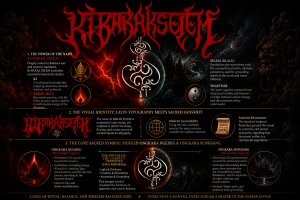
The sound is built upon five converging pillars: Gamelan Metal, Ethnic Metal, Ritual Metal, Spiritual Metal, and Vedic Metal. At its core lies the hypnotic resonance of Balinese gamelan — pentatonic scales, metallic overtones, and cyclical ceremonial pulse — merged with the crushing weight of doom, black, and atmospheric extreme metal. Each composition unfolds like ritual rather than conventional song form, creating an immersive sonic offering where tradition transforms distortion.
What does the name KI BARAK SÉLÉM mean?
“KI” is a traditional Javanese/Balinese title referring to an elder man recognized for wisdom and knowledge. “BARAK” means red — symbolizing courage, intensity, and wisdom. “SÉLÉM” means black — symbolizing compassion, calmness, and gentleness. Together, KI BARAK SÉLÉM represents a wise elder who conveys Dharma with strength and bravery while maintaining compassion and inner balance.
What themes do the lyrics explore?
The lyrics delve into mystical and esoteric aspects of Balinese ancestral teachings — including Butha Kala, Kanda Pat, Divine Dualities, Cosmic Union, and Bhairawa Tantra. Many songs incorporate traditional Balinese kidung (spiritual hymns) and ancient Sanskrit mantras, particularly in bridge and outro sections. The intention is not dogma, but offering — sacred reflection through sound.
Who is behind KI BARAK SELEM?
KI BARAK SELEM is the personal project of Kadek D. Putra Pande (a.k.a. Nararya Putra Pande / BrutalSick), a Balinese musician active in Indonesia’s underground metal scene since the early 2000s. He was formerly guitarist and founder of ABETTOR OF SATAN (Surabaya). In this project, he composes, arranges, and performs all instruments from his home studio. Guest vocals are occasionally contributed by Krisna Tedja.
Conclusion
More than a band, KI BARAK SELEM is a sacred vehicle for spiritual expression — honoring Balinese mystical traditions while forging a path in extreme metal.
“Balinese Mysticism Ritual Metal”